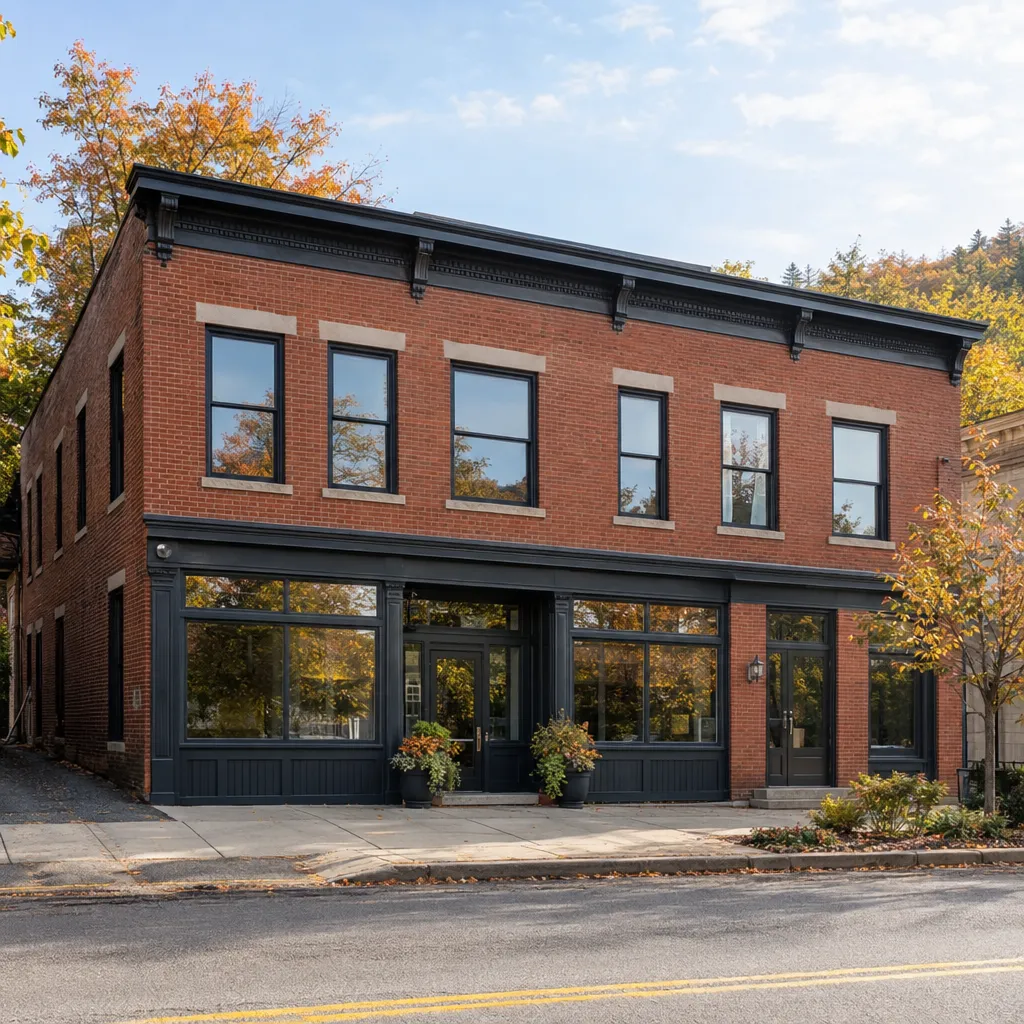
What to Look For When Evaluating a Commercial Investment Property in the Capital Region
Evaluating a Commercial Investment Property: What Actually Matters
Buying a commercial investment property is a different process from buying a home. The questions change, the risks change, and the numbers require a different kind of scrutiny. Whether you're looking at a small mixed-use building in Troy, a retail strip in Clifton Park, or a multifamily property in the Albany area, the evaluation process should be thorough and methodical before any offer is made.
This guide walks through the key factors experienced commercial buyers examine — and the questions worth asking before you commit to a deal in New York's Capital Region.
Start With the Income and Expenses — Not the Price
The asking price on a commercial investment property tells you relatively little on its own. What matters is the income the property actually produces and what it costs to operate it.
Request the seller's rent roll and at least two to three years of operating statements. The rent roll shows you who is renting, how much they're paying, when their leases expire, and whether any tenants are on month-to-month arrangements. Operating statements show real income and real expenses over time — not projections.
Key numbers to examine include:
- Gross potential income: The maximum rent if all units or spaces were fully occupied at market rents.
- Vacancy and credit loss: The realistic reduction for empty spaces and uncollected rent.
- Effective gross income: What the property actually collects after vacancies.
- Operating expenses: Taxes, insurance, maintenance, management, utilities paid by the owner, and reserves.
- Net operating income (NOI): What's left after operating expenses — the core metric that drives commercial property value.
One common mistake buyers make is accepting the seller's pro forma — a forward-looking income projection — without verifying it against actual historical results. Always compare the pro forma to what the property has actually produced.
Understand the Cap Rate — and Its Limits
The capitalization rate, or cap rate, divides the net operating income by the purchase price. It gives you a quick read on how the property is priced relative to its income. A higher cap rate generally means higher yield — but it can also signal more risk, weaker location, or an older asset requiring significant capital.
Cap rates vary by property type and location. Local market conditions in the Capital Region will influence where individual properties land relative to national benchmarks, and no two assets are identical in how they should be priced. Use the cap rate as a starting point for comparison — not a final answer. It doesn't account for financing costs, upcoming capital expenditures, or what happens when a lease expires.
Evaluate the Leases Carefully
For multi-tenant commercial properties, the leases are the asset. Before proceeding with any acquisition, request and review all existing leases in full.
Key lease factors to evaluate include:
- Lease term remaining: Long remaining terms provide income stability; short terms or month-to-month arrangements create rollover risk.
- Lease type: Gross leases put operating cost risk on the landlord; triple-net (NNN) leases shift most expenses to tenants. Know the difference.
- Rent escalations: Does the lease include scheduled rent increases, CPI adjustments, or flat rent for the entire term?
- Tenant options: Renewal options, expansion rights, and termination clauses all affect the property's future income and flexibility.
- Tenant creditworthiness: A long lease with a financially weak tenant may be less valuable than a shorter lease with a stable, established business.
If the property has significant near-term lease expirations, factor in realistic re-leasing timelines and tenant improvement costs when building your financial model.
Assess the Physical Condition
Commercial buildings vary widely in physical condition, and deferred maintenance is one of the most common ways buyers overpay. A professional commercial property inspection is not optional — it's a fundamental part of the due diligence process.
Key areas to assess include:
- Roof condition and remaining useful life
- HVAC systems — age, condition, and responsibility under existing leases
- Electrical systems and capacity
- Plumbing and drainage
- Parking lot, exterior, and site drainage
- ADA compliance and accessibility
- Environmental conditions, particularly for older properties or industrial-adjacent sites
Budget for capital expenditures honestly. A property with a failing roof, aging mechanical systems, or outdated electrical may still make sense — but only at a price that accounts for what it will actually cost to bring it to standard.
Location and Local Market Context
Location matters differently in commercial real estate depending on the property type. For retail, it's about traffic, visibility, and consumer demographics. For office, it's about accessibility, parking, and proximity to the tenant's workforce. For industrial, it's about logistics, highway access, and clear heights. For multifamily, it's about neighborhood quality, nearby employment, and demand for rental housing.
In New York's Capital Region, location dynamics vary significantly across submarkets. Downtown Albany continues to attract mixed-use and adaptive reuse investment. Suburban corridors in Clifton Park, Latham, and Colonie continue to draw tenants seeking accessibility and operational efficiency. Industrial demand across the region has remained strong, supported by proximity to major transportation corridors and growing interest in regional supply chain presence.
Understanding the submarket — not just the property — is essential to evaluating long-term value. A well-located property in a healthy submarket can support occupancy and rents through economic cycles. A poorly located property, even at a low price, may struggle to attract and retain tenants over time.
Know What the Market Is Doing
The commercial real estate investment environment in 2026 has become more active after a prolonged period of rate-driven caution. Financing conditions have improved as interest rates have moderated from recent peaks, and buyers who sat on the sidelines during that period are returning to the market. Income-driven returns — rather than appreciation-based speculation — are the primary driver of investor interest this year.
Locally, the Capital Region commercial market is showing disciplined stabilization across multiple property types, supported by constrained new construction and steady occupier demand. Industrial and well-located retail properties have shown particular resilience. Office continues to vary sharply by quality and location, with accessible, well-maintained spaces performing better than functionally dated stock.
Favorable market conditions don't guarantee a good acquisition. Strong overall trends don't eliminate asset-level risk. Doing the work at the property level — income, expenses, leases, physical condition, location — is what separates informed buyers from those relying on market optimism to fill the gaps in their diligence.
Work With Someone Who Knows the Market
Evaluating a commercial investment property takes time, discipline, and access to local market knowledge that isn't always visible in the listing. Understanding what comparable properties have sold for, what the tenant market looks like in a specific submarket, and what realistic rents and vacancy rates should be requires ground-level familiarity with the Capital Region.
York CRE works with buyers, investors, and property owners throughout Albany, Clifton Park, Saratoga County, Schenectady, Troy, and the broader Capital Region. If you're evaluating a commercial investment property or looking for opportunities in the market, we can help you work through the numbers and understand what you're actually buying.
Schedule a consultation with York CRE to discuss your commercial real estate investment goals in New York's Capital Region.